
The 1962 Lincoln Cent: Ordinary or Valuable?
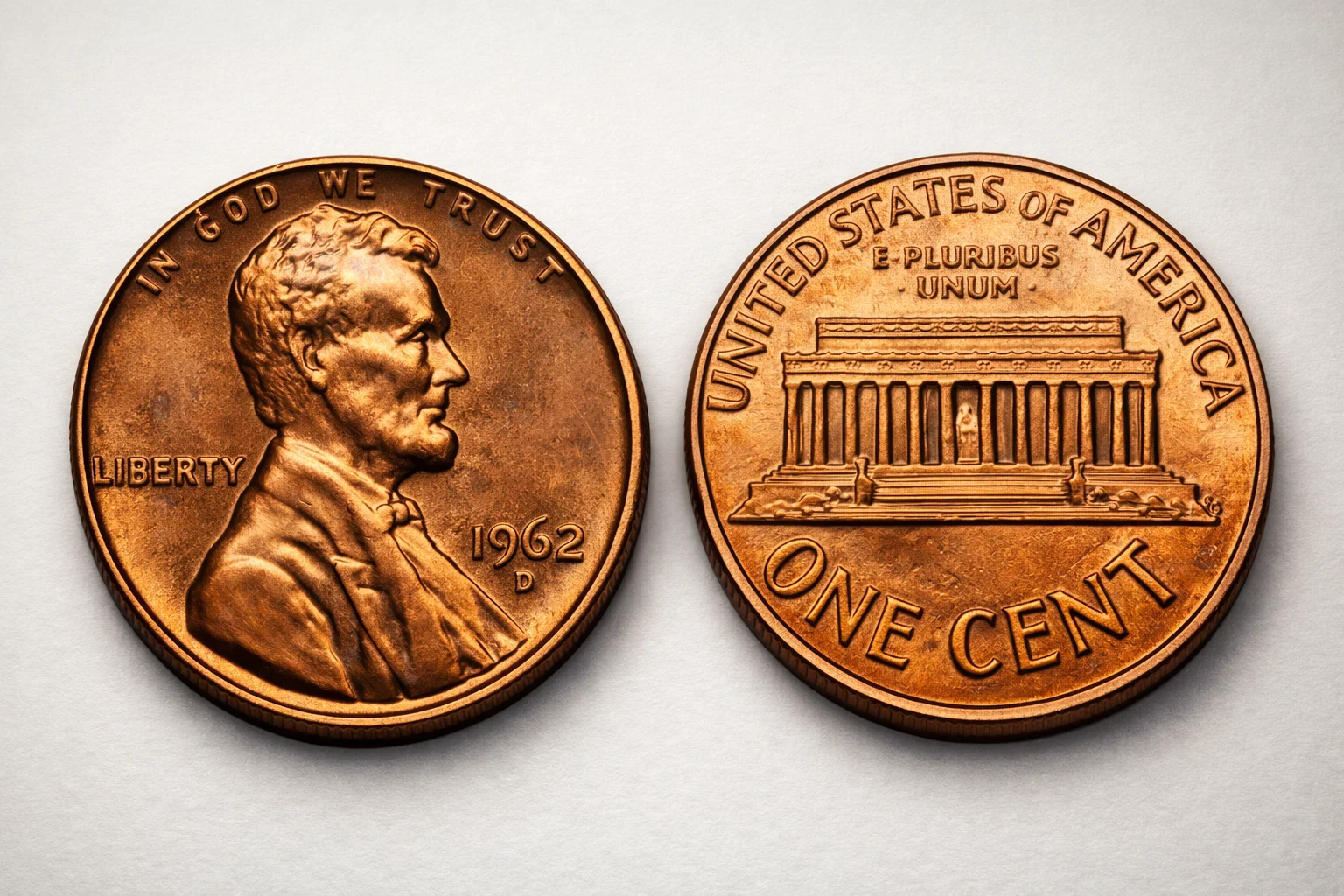
The Lincoln cent is known all over the world. It had already been in circulation for more than fifty years by 1962. The obverse shows Abraham Lincoln. The reverse carries the Lincoln Memorial design introduced in 1959. By the early 1960s, the look of the coin was familiar to every American.
Collectors often notice small differences within a decade. And to understand whether this coin is ordinary or valuable, we invite you to explore the context and review some factors carefully.
Basic Specifications
Before thinking about price, let’s check the main coin details:
Feature | Detail |
Year | 1962 |
Minting varieties: | 1962 penny no mint mark (Philadelphia), 1962 D penny (Denver) |
Obverse | Abraham Lincoln |
Reverse | Lincoln Memorial |
Composition | 95% copper, 5% tin & zinc |
Weight | 3.11 g |
Diameter | 19.05 mm |
Edge | Plain |
Do you have any difficulties when checking the main parameters? Don’t want to look for specs manually? Try our reliable coin scanner app to verify year, mint, and metal specifications. Coin ID Scanner can confirm type, provide technical data, and store coins digitally in a collection.
Its built-in AI helper answers basic questions quickly. Correct identification prevents most pricing mistakes. All in one app just for your convenience, but remember: the app only supports identification, but does not replace your grading skills.
What Actually Determines the Value Of This Penny
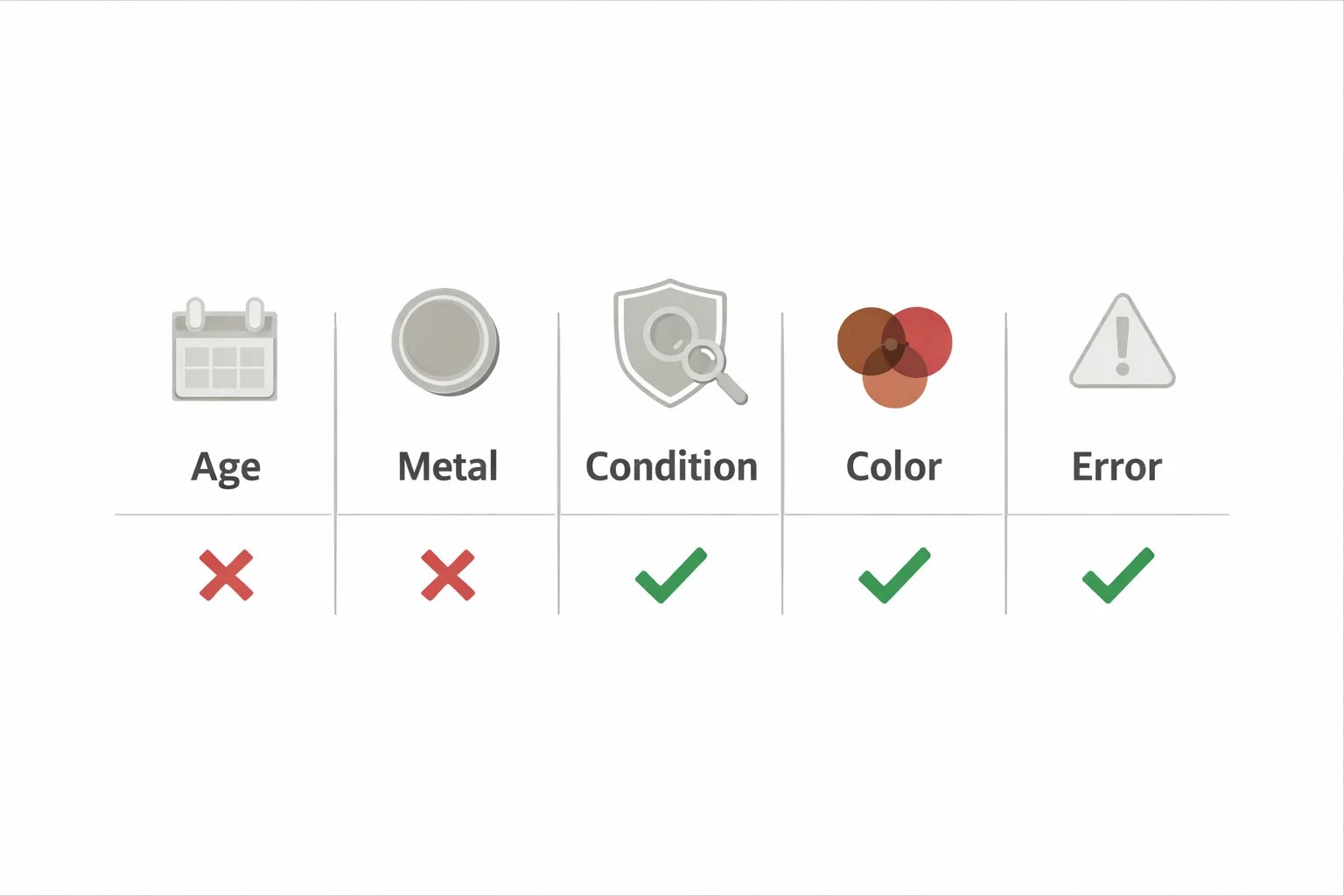
You know that the value of the coin is always a combination of factors, and the year alone does not create cost. Millions of pieces were struck, and supply remains high. Thus, market behavior depends on condition, color, and errors rather than date. Let’s see in detail.
Mintage and Market Context
Both Philadelphia and Denver produced large quantities in 1962. The total output exceeded two billion coins combined. Production aimed at circulation, not collecting.
These large numbers explain the cent’s availability today. Many examples survive; however, most of them are worn, and high-grade ones are worth more.
Survival rate matters more than original mintage. A year with lower output may still have fewer sharp examples. In the case of 1962, circulated pieces dominate. Mint State examples are less common but not rare.
Market perception remains steady. Thus, there is no strong premium related to the date itself (the 1962 Lincoln cent is not a key-year piece).
Condition
Condition defines price.
Most 1962 cents circulated for decades. Wear appears first on Lincoln’s cheek and jaw. Hair above the ear softens. Coat lines fade. On the reverse, Memorial columns lose separation.
Collectors separate three issues:
Circulation wear
Weak strike
Post-mint damage
Wear produces smooth, even flattening. Weak strikes show flat details with natural metal texture. Damage appears irregular and sharp.
Confusion between these factors leads to overpricing.
Uncirculated coins retain original luster. Surfaces reflect light evenly. High points remain sharp. Even small differences in surface quality matter in Mint State grades.
Mint Errors of 1962: Do They Change the Picture?
Errors can shift the value of any coin significantly. Clear production mistakes attract collectors, but minor defects do not. The main errors found on the 1962 Cent you can check in the table below.
Common 1962 Penny Errors
Error | What It Means | Typical Range |
Off-Center Strike | Design shifted off-center during striking | $10–$50+ |
BIE Die Break | Small raised mark between B and E in LIBERTY | $5–$15 |
Doubled Die (DDO / DDR) | Noticeable doubling in date or lettering | $100–$500+ |
Repunched Mint Mark (1962-D) | Secondary punch visible around the “D.” | $20–$100+ |
Disclaimer: Prices vary by grade, clarity, and demand. Weak or worn examples usually sell for less.
Off-center strikes occur when the blank is misaligned during striking. The larger the shift, the stronger the premium.
BIE errors result from a small die crack. They appear as a raised line between letters.
Doubled dies form during die creation. True doubling is strong and visible. These pieces are favored by specialists.
Repunched mint marks appear only on Denver coins. Philadelphia pieces cannot show this error because no mint mark was used.
And when looking for errors, remember: errors and all minting flaws must be distinct. Surface damage does not count.
Copper Composition and Color Grades (BN / RB / RD)
Color plays a critical role in value. Copper reacts with air. Over time, it darkens. Collectors classify Mint State cents by color:
Brown (BN) → Full brown tone. The original red is gone. Lowest premium in Mint State.
Red Brown (RB)→ Mixed red and brown surfaces. Partial original color remains. Moderate premium.
Red (RD) → Strong original red color. Highest premium in high grades.
Color affects price sharply in MS levels. An MS65 BN may sell for modest amounts. An MS65 RD can trade several times higher.
Important note: Cleaning harms value. Why? It removes natural patina and creates unnatural shine. Collectors detect cleaning easily. Artificial brightness lowers market interest.
Preserving the original surfaces matters more than appearance alone.
Is a 1962 Penny Really Valuable?
Most examples remain common. The coin is not rare by date alone.
Many people expect older coins to fall into the category of coins worth money. That expectation does not always match reality. Supply remains high. Demand focuses on condition and color.
Circulated pieces usually trade near face value. Uncirculated coins may bring you some profit. But strong errors can command higher prices.
Real value depends on preservation and eye appeal, not age.
Practical Price Overview (No Errors)
Grade | Typical Range |
Circulated | Face value |
AU | $1–$2 |
MS60–63 BN | $3–$8 |
MS64–65 BN | $10–$20 |
MS65 RD | $25–$60+ |
MS66 RD | Market dependent |
Prices fluctuate with demand and according to other factors, so always double-check the information before buying or selling. High-grade red coins show the strongest movement. Small differences in surface quality can double the price at upper levels.
Errors are excluded from this table.
Final Assessment: Ordinary or Valuable?
The 1962 Lincoln cent is primarily an ordinary circulation coin. High mintage and long use limit scarcity.
Value appears in three cases:
Strong Mint State preservation
Full red color in high grades
Clear, verifiable mint errors
Without these factors, the coin remains common.
The 1962 issue illustrates how the market evaluates copper cents from the early 1960s. Remember the main things: condition and originality matter; metal content does not create a premium, and age alone does not add value.
A realistic approach protects collectors from false expectations. Use reliable tools like the Coin ID Scanner app to check and verify basics and learn to understand surface quality, color grading, and error verification to receive precise and clear results about the coin’s worth rather thanrelying on the date.
The 1962 cent may not be dramatic, but it shows clearly how value forms in a high-mintage copper coin.
Related articles
-
Exploring the Convenience of Auto-Refill Services for Medications
In today's fast-paced world, convenience is key. From online shopping to food delivery services, people are constantly seeking ways to make their lives easier. This extends to the healthcare industry ... Read more -

The Future of Medicine Delivery: Same-Day Shipping and Beyond
The landscape of medicine delivery is rapidly evolving, with advancements in technology and logistics paving the way for faster and more efficient services. Gone are the days of waiting weeks for esse... Read more -

Relax, Take It Easy: Methods to Calm down without Pills and Sedatives
Discover natural relaxation techniques to calm your mind without pills. Learn about breathing exercises, the soothing power of nature, relaxing hobbies like coin collecting, and movement therapy to re... Read more